So, What Is a Kiritsuke Knife?
A Kiritsuke knife is a highly esteemed and versatile type of Japanese chef’s knife, often associated with the upper echelon of culinary expertise, particularly within Japanese cuisine. This knife is considered to be an all-purpose tool, but it is traditionally reserved for master chefs due to its demanding level of skill required for proper use. The Kiritsuke, both as a knife and a cutting technique, has historical and cultural significance that ties it deeply to the tradition of Japanese cooking.
1. The Kiritsuke Knife: Design and Characteristics
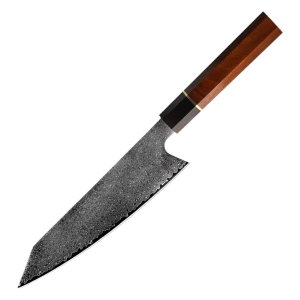
The Kiritsuke knife is typically characterized by its long, slender, and slightly curved blade. It blends features from two other famous Japanese knives: the Yanagiba (a knife used for slicing raw fish, particularly in sushi preparation) and the Santoku (a general-purpose knife).
- Blade Shape: The Kiritsuke’s blade has a distinctive shape with a sharp point and slightly curved edges. It typically ranges from 240mm to 270mm in length, making it a relatively long blade compared to more common kitchen knives. The slightly curved nature of the blade allows for both rocking and straight slicing motions. The blade’s spine often tapers smoothly, offering precision in cutting.
- Blade Profile: The Kiritsuke is traditionally single-beveled, meaning it is sharpened on one side only, similar to the Yanagiba. This single bevel gives it a distinct edge, allowing it to create cleaner, more precise cuts in delicate ingredients. The cutting angle can vary, but it is generally around 15-20 degrees, resulting in an extremely sharp edge.
- Handle: Like many traditional Japanese knives, the Kiritsuke typically features a wa-style handle, which is rounded and made of wood (often magnolia or other hardwoods). This handle is often ergonomically designed for a comfortable grip, especially during precision tasks. The design helps provide balance, as the Kiritsuke is typically lighter and more agile than Western-style knives with similar lengths.
2. The Role of Kiritsuke Knife in the Kitchen
The Kiritsuke is a multi-purpose knife that can be used for various tasks in the kitchen, but it is best suited for precise, delicate cuts. While the knife is versatile, it has traditionally been used in high-end sushi restaurants or by professional chefs with advanced knife skills. It has a historical and symbolic status, often representing a chef who has reached a certain level of mastery.
Here are some common uses for the Kiritsuke:
- Slicing Fish for Sushi: The primary use of the Kiritsuke is slicing fish, especially for sashimi and sushi. The knife’s sharp, single-bevel edge allows it to make very clean cuts without tearing the delicate flesh of the fish. It is particularly prized for its ability to create paper-thin, perfectly clean slices of raw fish.
- Vegetable Prep: The knife is also excellent for vegetable preparation, especially tasks like julienning or slicing. Its precision and sharpness allow chefs to create uniform slices, a critical aspect in Japanese cooking where presentation is key.
- Meat and Poultry: While it may not be the go-to knife for heavy-duty tasks like breaking down large cuts of meat, the Kiritsuke is perfectly suited for slicing through boneless meats and poultry with precision, especially when a clean, straight cut is needed.
- Precision Cuts: One of the defining features of the Kiritsuke is its ability to make intricate and precise cuts. Whether you’re creating uniform pieces for a dish or slicing delicate garnishes, the Kiritsuke shines in these tasks. The sharpness of the blade allows for a high degree of control, essential for any cutting that requires careful attention to detail.
3. Kiritsuke and Japanese Culinary Tradition
The Kiritsuke knife holds significant cultural importance in Japanese culinary traditions. In the past, the Kiritsuke was used almost exclusively by head chefs or master chefs in Japanese kitchens (known as “itamae” in sushi restaurants). This is because the knife requires a high level of expertise to wield properly. Traditionally, only chefs who had reached the pinnacle of their culinary careers were allowed to use the Kiritsuke.
- Symbol of Mastery: In Japan, the use of a Kiritsuke knife is often seen as a badge of honor. It symbolizes a chef’s advanced skills and experience. Many sushi chefs would wait until they had achieved the title of itamae before using a Kiritsuke. As a result, it’s not uncommon for younger or less experienced chefs to use other knives like the Gyuto (a Japanese-style chef’s knife) or Santoku instead.
- The Prestige of the Kiritsuke: The Kiritsuke is often associated with prestige and respect in the culinary community. It is considered to be the knife of a master, and it is believed that only someone with extensive experience and knowledge of traditional knife techniques can truly do justice to a Kiritsuke’s design.
4. Cutting Technique: Kiritsuke (The Skill of the Knife)
In addition to being the name of the knife itself, “kiritsuke” also refers to a specific cutting technique used in Japanese cuisine. The kiritsuke cutting technique typically involves a straight, downward cut that requires a high degree of control and precision. This technique is used in various types of food preparation, particularly when slicing fish for sushi or sashimi.
The kiritsuke cut is most commonly used in sushi preparation, where the knife is employed to make clean, controlled slices of raw fish. This cut requires an exacting motion, where the blade’s edge slices cleanly through the fish without dragging or tearing the delicate flesh. The motion also involves a subtle angle that helps separate the flesh with minimal resistance.
5. The Evolution and Modern Use of the Kiritsuke Knife
Although the Kiritsuke was traditionally reserved for the most skilled chefs, its use has evolved in modern times. With the global appreciation of Japanese cuisine, chefs outside Japan have also come to appreciate the unique qualities of the Kiritsuke. As a result, the knife has gained popularity in culinary schools and professional kitchens worldwide.
- Global Popularity: Outside Japan, the Kiritsuke is becoming a popular knife among chefs who appreciate its precision and versatility. However, it still remains a knife that requires significant experience to master, and it’s often viewed as a symbol of a chef who has reached an advanced level of expertise in their craft.
- Contemporary Design and Manufacturing: Modern Kiritsuke knives are often made with high-quality materials, such as VG10 steel, blue steel, or stainless steel. These materials are used to create an edge that holds its sharpness for a long time, ensuring that the Kiritsuke remains an effective tool for precision cutting. In addition, some contemporary Kiritsuke knives may feature western-style handles to suit the preferences of international chefs.
Conclusion
The Kiritsuke is a symbol of mastery in Japanese culinary traditions. Whether used as a knife or to describe a specific cutting technique, it represents precision, skill, and the highest level of craftsmanship in the kitchen. Its versatile design allows for a variety of culinary tasks, from sushi and sashimi preparation to intricate vegetable slicing. Reserved traditionally for only the most experienced chefs, the Kiritsuke has evolved into a highly respected tool in professional kitchens across the world. For those who are fortunate enough to wield it, the Kiritsuke is not just a knife, but a symbol of dedication, experience, and a deep understanding of the art of cooking.
See more: 6 Essential Tips on How to Use A Kiritsuke Knife