
6 Essential Tips on How to Use A Kiritsuke Knife
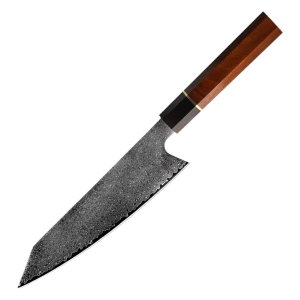
A Kiritsuke knife is a versatile Japanese chef’s knife with a unique, slightly curved blade and an angular tip. It’s traditionally used by master chefs for precise tasks, but it can be a valuable tool for anyone in the kitchen.
The Kiritsuke knife is an elegant and versatile kitchen tool, often seen as a symbol of a master chef’s skill in Japanese cuisine. Its unique features, including the slightly curved blade and angular tip, make it perfect for a range of tasks that require precision and technique.
Key Features:
- Slight Curvature: The subtle curve allows for a smooth rocking motion, making slicing and chopping more efficient, especially for vegetables.
- Angular Tip: The pointed tip is great for precise cutting tasks like filleting fish, removing bones, or creating intricate garnishes.
- Long, Narrow Blade: Typically ranging from 8 to 10 inches, this blade offers excellent control and stability, perfect for fine cuts, whether slicing meat, fish, or vegetables.
Traditional Use Of Kiritsuke Knife:
The Kiritsuke knife is historically a dual-purpose knife in Japan, combining the functions of a Gyuto (chef’s knife) and Yanagiba (sashimi knife). It’s commonly used for:
- Slicing fish for sushi or sashimi due to its sharpness and precision.
- Vegetable prep, especially when delicate or uniform cuts are required.
- Precision cutting tasks like making fine garnishes or intricate shapes in food.
Even though the using of Kiritsuki knife was once a knife reserved for high-level chefs, it has gained popularity among home cooks due to its versatility and clean cuts. It’s a great choice for anyone wanting to elevate their culinary skills, particularly in fine-dining-style preparations.
Are you thinking of learning how to use a Kiritsuke knife in your kitchen collection, or do you already have one in your tools?
Here’s how to use a Kiritsuke knife effectively:
1. Grip the Knife Properly
- Western Grip (Pinch Grip): Hold the handle of the knife with your index finger and thumb pinching the blade’s spine, while the other fingers wrap around the handle.
- Traditional Grip: You can also hold the handle firmly in your hand with all fingers, but using the pinch grip is more efficient and offers better control.
2. How To Use A Kiritsuke Knife – Cutting Techniques
- Slicing (Takamatsu or Pull-Cut): Use Kiritsuke’s long blade to slice through ingredients with smooth, single strokes. The curved edge allows you to cut with a rocking motion.
- Chopping and Rocking: The Kiritsuke has a good amount of weight behind the blade, so use it for chopping vegetables or herbs. The sharp point makes it ideal for rocking motions and getting through denser foods.
- Precision Cuts: The angular tip makes it excellent for precise cuts. If you’re looking for thin, uniform slices or intricate cuts, this knife is great for that.
3. Food Types
- Vegetables: It’s excellent for slicing vegetables like onions, carrots, and root vegetables. The sharpness and length of the blade help create clean, precise cuts.
- Fish and Meat: Traditionally, Kiritsuke knives are used for fish but can be great for meat as well, especially when you need precise, clean cuts for sashimi or filleting.
- General Purpose: With its blend of the Gyuto (chef’s knife) and Yanagiba (sashimi knife), the Kiritsuke is suitable for a range of cutting tasks, from chopping and slicing to dicing.
4. Cutting Motion
- Push Cut: For vegetables or meat, a simple push cut will work. The long blade helps with smooth, uninterrupted cutting.
- Pull-Cut or Slice: The knife’s curved edge allows a natural slicing motion that is particularly effective for delicate cuts.
5. Care and Maintenance
- Sharpness: Keep the Kiritsuke sharp, as it’s known for its fine edge. Regularly hone or sharpen the knife to maintain its precision.
- Cleaning: Clean the knife immediately after use with warm, soapy water and dry it to prevent rust. Do not put it in a dishwasher.
- Storage: Store it in a knife block or magnetic strip to avoid damaging the blade.
6. Limitations
- Not for Heavy Tasks: While the Kiritsuke is very versatile, it’s not intended for heavy tasks like boning or cleaving bones. You would need a more robust knife for that.
The Kiritsuke knife is an excellent tool if used for the right tasks, and with the right grip and cutting techniques, it can help you achieve professional-level precision in the kitchen. I hope this article helped you to learn how to use a Kiritsuke knife.
See more: Are Japanese knives better than Western ones?
Kiritsuke Knives


Pingback: What is a Kiritsuke Knife?